
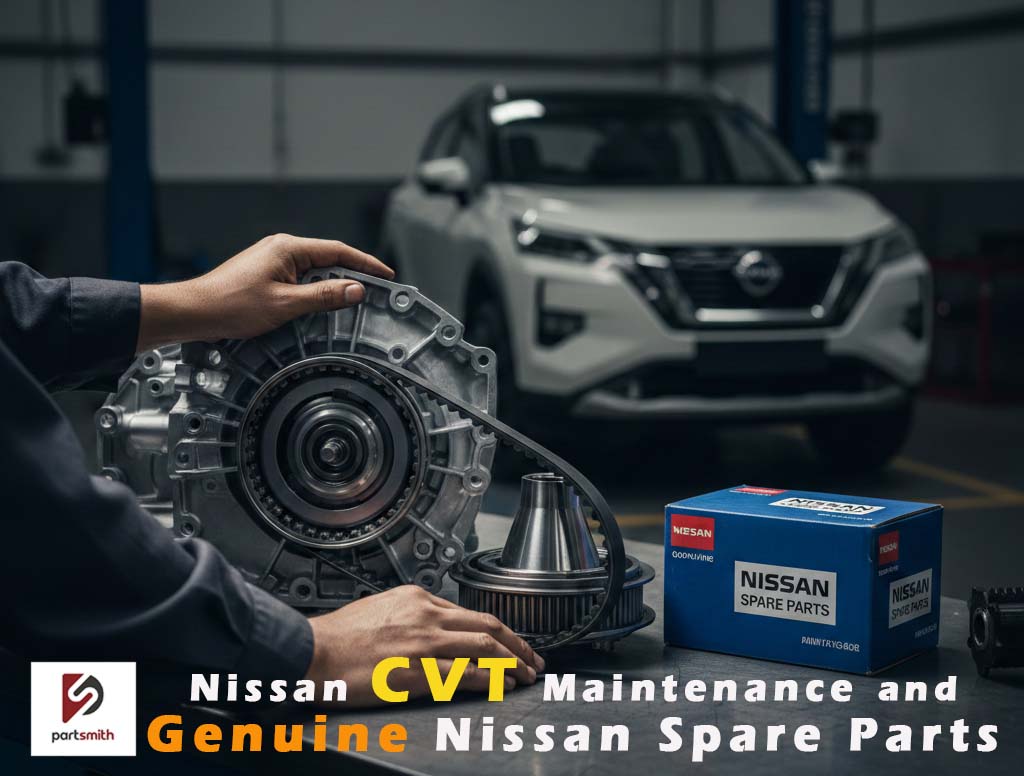
If you own a Nissan or are planning to buy one, you’ve likely heard the chatter surrounding the CVT (Continuously Variable Transmission). Nissan was a pioneer in adopting CVT technology to improve fuel efficiency and provide a smoother driving experience. However, like any sophisticated piece of engineering, it isn't without its quirks.
Understanding how this transmission works—and why it sometimes fails—is the key to ensuring your vehicle stays on the road for years. In this guide, we’ll dive deep into common Nissan CVT issues, how to spot them early, and why using Genuine Nissan Spare Parts is non-negotiable for longevity.
Unlike a traditional automatic transmission that uses gears (1st, 2nd, 3rd, etc.), a CVT uses a belt and pulley system. This allows for an infinite number of "gear ratios," meaning the engine can always run at its most efficient RPM.
The Benefits:
However, the "infinite" nature of the CVT means it generates more heat than traditional gearboxes, which is often the root of most problems.
5 Common Signs of Nissan CVT Problems
Early detection can save you thousands of dollars in replacement costs. Keep an eye (and ear) out for these symptoms:
1. The "Whining" Noise
If you hear a high-pitched whining sound while accelerating or driving at high speeds, it’s a red flag. This usually indicates that the transmission fluid is overheating or the bearings are wearing down.
2. Lack of Response (Lag)
Do you press the gas pedal and feel like the car is "hesitating" before it actually moves? While CVTs feel different from traditional automatics, a noticeable delay or "slipping" sensation often means the belt inside the transmission is struggling.
3. Transmission Overheating and "Limp Mode"
Nissan vehicles have a fail-safe called "Limp Mode." If the CVT gets too hot, the car will significantly reduce power to protect the transmission from melting down. You might find your car refusing to go over 40-50 km/h.
4. Fluid Leaks
CVTs rely heavily on hydraulic pressure. Even a small leak can lead to a drop in pressure, causing the belt to slip and eventually snap.
5. Shuddering or Vibration
If the car shakes when you are driving at a constant speed, it could be a sign of "micro-slippage" within the CVT pulleys.
When a CVT starts acting up, many owners try to save money by opting for "universal" transmission fluids or cheap aftermarket components. This is a critical mistake.
The Role of Genuine Nissan Spare Parts in Transmission Health
The CVT is a closed, high-precision system. Using Genuine Nissan Spare Parts ensures that every seal, filter, and bolt meets the exact pressure and heat tolerances required by the manufacturer.
For instance, Nissan’s proprietary NS-3 CVT Fluid is specifically formulated to manage the friction between the steel belt and the pulleys. Using a generic fluid can lead to chemical breakdown, resulting in the dreaded "whining" noise and eventual mechanical failure. When you insist on Genuine Nissan Spare Parts, you aren't just buying a component; you are buying the assurance that your transmission won't reject the repair. Need genuine parts for your Nissan CVT service? Inquiry Now
You don't have to live in fear of a transmission swap. Follow these steps to keep your CVT healthy:
1. Change Your Fluid Regularly
Forget the "Lifetime Fluid" myth. Most experts recommend changing Nissan CVT fluid every 40,000 to 50,000 kilometers, especially if you drive in heavy traffic or hot climates. Fresh fluid keeps temperatures down and lubrication high.
2. Avoid "Aggressive" Driving
CVTs are built for efficiency, not drag racing. Constant floor-to-metal acceleration creates immense heat. Smooth, linear acceleration is the best way to treat a CVT.
3. Install an External Oil Cooler
If you live in a very hot region or frequently drive in hilly terrain, consider installing an external transmission oil cooler. This helps dissipate heat more effectively than the stock radiator setup.
4. Don't Ignore the Filters
Most Nissan CVTs have two filters—one inside the pan and a smaller "cartridge" filter. Replacing these with Genuine Nissan Spare Parts during your fluid change prevents metal shavings from circulating through the system.
Is a Nissan CVT Right for You?
Despite the historical issues, modern Nissan CVTs (post-2020) have seen significant improvements in cooling and software logic. Models like the Nissan Magnite and the new X-Trail have been praised for their responsiveness.
The secret to a long-lasting Nissan isn't luck—it's proactive maintenance. By listening to your car, driving mindfully, and always insisting on Genuine Nissan Spare Parts, you can enjoy the smooth, fuel-efficient ride that Nissan intended.
Summary Table: CVT Care at a Glance
|
Symptom |
Potential Cause |
Solution |
|
High-pitched whine |
Overheating fluid |
Change fluid & check cooling |
|
Shuddering |
Belt slippage |
Inspect pulleys; use NS-3 Fluid |
|
Lagging/Slipping |
Low pressure |
Check for leaks; use Genuine Nissan Spare Parts |
|
Limp Mode |
Extreme heat |
Stop car; install external cooler |
Conclusion
A Nissan vehicle is a fantastic investment in comfort and technology. While the CVT requires a bit more attention than an old-school manual gearbox, the benefits of fuel savings and smoothness are worth it. Treat your transmission with respect, service it on time, and never compromise on the quality of your parts.
Looking for specific Nissan spare parts? Send us an inquiry and our team will help you find the right OEM components.
1. What is the average lifespan of a Nissan CVT transmission?
With proper maintenance and sensible driving habits, a Nissan CVT can typically last between 150,000 to 200,000 kilometers (approx. 100,000 to 120,000 miles). The key to longevity is avoiding aggressive acceleration and sticking to a strict fluid change schedule using Genuine Nissan Spare Parts.
2. Can a Nissan CVT be repaired, or does it always need replacement?
Minor issues such as sensor failures, solenoid malfunctions, or external fluid leaks can often be repaired. However, if there is internal damage to the steel belt or the pulleys, most mechanics recommend a full transmission replacement, as internal CVT components are high-precision units that are difficult to rebuild outside of a factory setting.
3. How do I know if my Nissan CVT fluid is burnt or bad?
Fresh Nissan CVT fluid (usually NS-3) is typically light green or pinkish in color. If you pull the dipstick and notice the fluid has turned dark brown or black, or if it emits a burnt smell, it has lost its lubricating properties and needs to be flushed immediately to prevent metal-on-metal friction.
4. Can I use regular Automatic Transmission Fluid (ATF) in my Nissan CVT?
No. Using standard ATF in a CVT is a recipe for disaster. CVTs require a specific friction coefficient to allow the belt to grip the pulleys without slipping. Using anything other than the manufacturer-recommended NS-2 or NS-3 fluid can cause the transmission to fail within a few hundred kilometers.
5. Has Nissan fixed the CVT problems in newer 2024-2026 models?
Yes, Nissan has made significant engineering leaps. Newer generations of the Xtronic CVT feature improved software logic, better heat management systems, and high-strength belts. Models like the Nissan Magnite and the latest X-Trail have shown much higher reliability ratings compared to models from a decade ago.
6. Where is the best place to buy Genuine Nissan Spare Parts?
To ensure the health of your vehicle, you should always source Genuine Nissan Spare Parts through authorized Nissan dealerships or certified OEM parts distributors. Avoid "too-good-to-be-true" deals on third-party marketplaces, as counterfeit filters and fluids are the leading cause of premature CVT failure.